

Posts tagged Romans
SERMON SPOTLIGHT * 1/4/26

Why Romans? Romans is the clearest, most comprehensive presentation of the gospel in all of Scripture. Below is an outline summary of the sermon for your further study and deeper reflection.

SERIES: Romans: The Power of God in the Gospel of Christ
TEXT:
Romans 1:1-7
TITLE:  God, The Gospel, And Us
PREACHER: Derek Overstreet
BIG IDEA: Because the gospel is God’s eternal good news, we can confidently surrender our lives to Jesus in every way.

POINTS:
I. The Author of the Gospel
II. The Person of the Gospel
III. The Goal of the Gospel

SERMON EXCERPTS:
All quotes and text emphasis are taken directly from the pastor’s notes.
”As a unit, it is the longest introduction of all Paul’s letters. Romans 1:1-7 is a summary of Romans packed into one long sentence.”

Why Romans? Romans is the clearest, most comprehensive presentation of the gospel in all of Scripture. As we explore the theological depths of the gospel and humbly embrace its practical outworkings in our lives, the ultimate effect of Romans should be a more profound gratitude for saving grace, a stronger unity within our church, and a greater zeal for our mission together.”

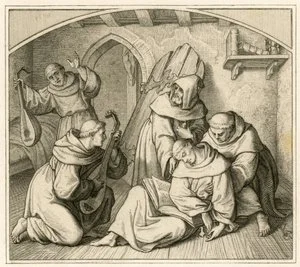
“Martin Luther called Romans the purest gospel and the chief part of the NT. He also said this: [Romans] is worthy not only that every Christian should know it word for word, by heart, but occupy himself with it every day, as the daily bread of the soul. It can never be read or pondered too much, and the more it is dealt with, the more precious it becomes, and the better it tastes.”

“We agree. So we sent an email on Friday with a list of suggested ways, each one different, that you can benefit from this series beyond the preaching. One correction. In the email, it was suggested you start memorizing Romans 8. Don’t do that. We thought it would be beneficial to memorize portions of Romans together. So, if the week's preached text includes a scripture memorization, we will let you know.” 

“The author of Romans is clear in 1—the Apostle Paul. He wrote this letter while in Corinth around 57 AD. In Ch. 15, Paul says he was going to Jerusalem to deliver an offering and intended to stop off in Rome on his way to Spain. Paul wanted to encourage them in Christ, be encouraged by them in Christ, and appeal to them to partner with him in taking the gospel to Spain (Romans 15).”

“Here's what Paul knows: The best way to fuel zeal for mission isn’t clear strategy—it’s more gospel. Strategy is good and important, but being enthralled with the gospel is paramount!”

Don’t miss God’s providence: We are feasting on the gospel of Romans as we continue to grow in evangelism and plant a church on the east side. God’s got us right where He wants us!

“The church in Rome knew who Paul was, and he knew who they were, as we will see next week. But Paul had never visited the church in Rome. In fact, he didn’t plant this church. This church probably began with a group of Roman Jews who, according to Acts 2:10, were at Pentecost. Saved in Jerusalem, perhaps responding to Peter’s powerful sermon, they brought the gospel back to their synagogues, and Christianity was born in Rome. As it says in Acts 1:8—You will be my Spirit-filled witnesses, not just in Jerusalem, but to the ends of the earth.”

“So Paul begins this letter introducing himself—read 1. The interesting thing about 1 is that Paul makes himself small. He is a servant (slave) of Jesus Christ. His life is not his own. He committed and surrendered to Jesus. He also introduces himself as an apostle, the NT version of the OT prophet—an authoritative mouthpiece of God. Paul was who he was because God called and set him apart.”

 “Someone said—We Christians are a bunch of nobodies pointing to a great somebody. That’s precisely what Paul is doing here. But I want you to notice the end of 1. Paul refers to the gospel as the gospel of God. Now keep reading in 2 where he refers to the gospel as the promise of God handed down through the prophets in OT Scripture. God is sovereign over it all because he is the Author of it all.”

“God is the author of the gospel.”

“Right up front, Paul establishes that all that follows in his letter is from God. The gospel is God’s idea to save the world, not Paul’s. The gospel is not a new idea; it’s God’s eternal plan. The gospel is God’s wisdom, not the church's. God, not the culture, defines the gospel. The gospel is God’s promised thread of continuity from eternity to eternity, not a fleeting novelty.”

Thank you, Paul, for beginning this way! Because how critical is this conviction? Paul has just shared how his entire life is owed and surrendered to God and the gospel. As we will see in 5, that is our calling as well. So, don’t we need to be confident that we aren’t building our lives on shifting sand but solid rock?”

“When the seas and mountains of life roar and shake. When the grass of this world looks so much greener. When we are unsuccessfully trying to be faithful evangelists, to be confident that the gospel is not human speculation, not one religion among many, not a desperate shot in the dark, not a philosophy that evolves one culture at a time. It is God’s eternal and just plan to save the world.”  

“One of the fruits we pray will be borne by preaching through Romans in our church is a greater confidence in the power of the gospel for every area of our lives and every aspect of our mission together.”

“Now and then, you hear a politician say that America is an idea, an experiment in human potential that is continually being perfected. And the substance of this grand idea is not a person or group of people, but certain inalienable rights and liberties. The gospel is not an idea. It’s not an experiment. And it's built on a person. At the heart of the gospel is God’s Son, Jesus.” 

“Paul presents the gospel from beginning to end here. He starts by linking Jesus to David, identifying him as the person of the messianic promises of the OT, beginning in Gen 3 and spanning 1500 years and 30 different authors, all of whom consistently tell the same story about Jesus, the one who comes to save God’s people.”

“Jesus entered our fallen world, where sin and death reign. In doing so, he exposed himself during his own ministry to a life of weakness and humiliation. In that weakness and humiliation, or as 3 puts it—according to the flesh, Jesus lived a perfect life for 33 years and gave up his life on the cross as a substitutionary death for sinners. But Jesus overcame death.”

“Paul goes from Jesus’ life of humiliation and weakness in a fallen world—which was climaxed at the cross—to his powerful resurrection. At that moment, he was declared and crowned, just as God had ordained, the Son of God in power. To be clear, Jesus has always been the Son of God. When he lived on the earth as David’s descendant, he was the Son of God. Paul begins 3—concerning His Son. We believe in the eternal sonship of Jesus.” 

“It’s not the resurrection that MADE him the Son of God, that would be the heresy of adoptionism. As the second person of the godhead, Jesus is eternally divine. But his resurrection did usher in a NEW ROLE as the Messiah. Just as Jesus has not always been the Lamb that was slain, Jesus is now the risen Lord and Savior.”

“Jesus resurrection marked a new stage in redemptive history, the age of the Spirit, where the living and life-giving resurrected Messiah brings salvation to all who believe, even the Gentile— (5) among all the nations, rescuing them from this world of weakness, sin, and death. And at the heart of it all is God’s son, Jesus. Jesus is the substance of the gospel. A crucified, risen, and reigning Jesus is what makes the gospel good news.”   

We love good news. We anticipate the call giving us the good news that we got the job. Young people nervously await the good news of acceptance into a college. A husband eagerly awaits the good news from his wife—We’re pregnant! Like many of you, this week Donna and I eagerly awaited the good news that Jim Francis was free from cancer in his brain. Who doesn’t love good news? Yet, we can forget the most fantastic news we have ever heard and ever will hear—the best news of all in the gospel of Jesus Christ.”

“If you’ve ever heard someone around here say—I’m doing better than I deserve—here’s why. They are convinced the good news of the gospel is the best news they could ever and will ever hear and believe.”

“That’s what Romans is about—the good news of the gospel. The bad news is we must pay for our sins, which we can never do (Romans 3). The good news is—Jesus paid it all! The good news of the gospel puts all the bad news in our lives into perspective. That’s what Romans does—it puts our lives in perspective!”  

“In a letter where Paul pounds the nail of justification by faith alone, what he says here seems out of place—the goal of the gospel is to bring glory to Jesus through the obedience of faith.”

“What is Paul talking about? Is he talking about obedience that flows from faith in Jesus? If so, he has just leapfrogged conversion to get to sanctification. Or does he mean to say obedience, which is faith? In one sense, the evangelistic call to believe in Jesus is an act of obedience. Jesus himself said in Mark 1:15—The time is fulfilled, and the kingdom of God is at hand; repent and believe in the gospel. So, which is it—sanctification or conversion? Is this about evangelism or Christian living? It’s about both. The purpose of Paul’s ministry and the goal of the gospel is transformed lives that bring glory to Jesus through the power and grace of God.”    

“Contrary to what some people believe, you can’t accept Jesus as your Savior, but not live for him as your Lord. By raising him from the dead, God has declared Jesus to be Savior and Lord, and commands all people everywhere to believe and submit to him. So, to have faith in Jesus as Lord and Savior is the first act of obedience.”

“For Christians, saving faith always leads to faith-filled obedience. Faith alone saves, but saving faith is never alone. This is the point of James 2—Faith without works is dead, and it’s Paul’s point here. We will unpack this more as we go because throughout Romans, Paul repeatedly reminds us that true faith always results in obedience.”

“It’s by the grace and power of the gospel that I believe in Jesus for my salvation. By that same grace and power, I am enabled to obey him. God calls me to be patient with Donna. As a sinner now justified before God, that is a gospel claim on my life. But I can’t do that in my own strength. So, when I rely on God’s grace to be patient with Donna, what is my reliance—FAITH. That makes my obedience the fruit of my faith. In this way, faith and obedience go together. They are distinct yet inseparable.”

“We live for the glory of Jesus through the obedience of faith, by grace and with a peace in our hearts that comes from knowing that we stand justified and loved by God in Christ. Now we are free to live the freedom of the gospel, assured that all our sins and failures are covered in the grace of the gospel, and nothing can separate us from Christ. That brings true peace and great glory to our Lord and Savior. And it’s all because of the power of God in the gospel of Jesus Christ. That’s the book of Romans.

APPLICATION:
Question for 2026: In what areas of your life do you lack confidence in the power of the gospel? 

QUOTES:
Thomas Schreiner - “While Jesus was on earth, he was the Messiah and the Son of God, but his death and resurrection inaugurated a stage in his messianic existence that was not formally his. Now he reigns in heaven as Lord and Christ.”

Douglas Moo - “Jesus as the locus of good news is intended to counter the idea that true good news can be found anywhere else—whether it be another religion or philosophy, a particular lifestyle, or the pleasures of ordinary life.”

Karl Barth - “Faith is not obedience, but as obedience is not obedience without faith, faith is not faith without obedience. They belong together, as do thunder and lightning in a thunderstorm.”

SONGS FROM THIS SUNDAY:
The Gospel Was Promised
In Christ Alone
Grace and Peace

Scripture Reading: Ephesians 1:16-20
How Vast The Love

NEXT WEEK’S PASSAGE:
Romans 1:8-15, The Church of Romans

THE BOOK OF THE QUARTER:

CLICK BELOW TO PURCHASE OUR BOOK OF THE QUARTER:

buy here
Recommended Resources for the Romans Series

Happy New Year, Church!

Your pastors count it a privilege and joy to encourage and serve you in the many ways that the Lord has called us to. The word of God preached is central to our ministry in the life of our church, and so, we are excited to begin preaching through Paul's letter to the Roman church: Romans: The Power of God in the Gospel of Christ.

With the preached word as primary, BELOW is a list of resources that we highly recommend to help you engage with, enjoy, and apply the book of Romans. How kind of God to have provided a myriad of ways for us to hear the word. Throughout the Scriptures, we find God's people reading the word, remembering the word, singing the word, praying the word, retelling the word, devoting themselves to the word, counseled from the word, writing the word, meditating on the word, teaching the word, and obeying and applying God's word. All of these are means of God's grace for us as we respond to Him in worship and glorify Him!

Our Senior Pastor, Derek, recently said of this sermon series in Romans, "As we explore the theological depths of the gospel and humbly embrace its practical outworkings in our lives, the ultimate effect of Romans should be a more profound gratitude for saving grace, a stronger unity within our church, and a greater zeal in our mission together."

This is what awaits us: a "more profound gratitude for saving grace, a stronger unity..., and a greater zeal in our mission together."

We can joyfully anticipate knowing God more, understanding ourselves biblically, and, together, growing all the more in our faith and love for the Savior, Jesus!

We are praying for you all, and by the grace of God, may we all marvel together in "The Power of God in the Gospel of Christ" throughout our exploration of the book of Romans!

Here are the recommended resources:

Scripture Memorization - Begin to memorize portions of Romans (Possibly begin with Chapter 8!)
Romans Scripture Journal (Crossway) - A GIFT for you: Stop by and pick up your copy of one of these journals for each of our men and women at our Welcome Desk in the lobby.
Personal Bible Study—Romans: A 12-Week Study (ESV-Knowing the Bible)
Grace Has Come: Songs from the Book of Romans—Sovereign Grace Music
Devotional—The Power of the Gospel: A Year In Romans by RC Sproul
Commentary—The Message of Romans by John Stott (BST)
The Cutting Board Blog—Each week, we email you our latest Sermon Spotlight Post that provides a very useful and detailed summary of every Sunday Sermon. As we preach through Romans, these Sermon Blog Posts will be an excellent tool provided for your further study. Additionally, throughout the sermon series, look for Special Topics on Romans right here on the Cutting Board Blog.

-Tom

SERMON SPOTLIGHT * 9/8/24

The church doesn’t exist for itself—we exist for God’s glory. That means we need to understand where God Himself is going and what He is doing so that all we do serves His purpose. That’s the point of the next four weeks. Our theme for the new ministry year is Going not Knowing. Below is an outline summary of the sermon for your further study and deeper reflection.

SERIES: Going Not Knowing
TEXT:
Romans 12:1
TITLE: Living on the Altar
PREACHER: Derek Overstreet
BIG IDEA: We do what we do because Jesus did what he did.

POINTS:
1. A Life of Worship is Compelled by the Gospel
2. A Life of Worship is Complete Gospel Devotion

SERMON EXCERPTS:
All quotes are taken from the pastor’s notes.
”Everyone is looking for meaning and purpose—Why am I here? Where do I fit in? Where should my life be going? These are crucial questions. As a local church, those questions are crucial—Why do we exist? Where are we going? What are we supposed to be doing?  Too often the answers to those questions arise from the convenience of pragmatism, the pressure of the majority, the winds of culture, or the sanctity of tradition. But the church doesn’t exist for itself—we exist for God’s glory. That means we need to understand where God Himself is going and what He is doing so that all we do serves His purpose.”

“Our theme for the new ministry year is Going not Knowing. That phrase is rooted in Acts 20:22 where Paul said—Behold, I am going to Jerusalem, constrained by the Spirit, not knowing what will happen to me there. We are going into this new year not knowing what God will do. Here’s what we do know: Our mission is to build a God-glorifying church that proclaims and demonstrates the transforming power of the gospel to our city and beyond.”

“It’s a mission that is upward, inward, and outward. Biblically speaking, this is the three-fold purpose of any church:

  • Upward Ministry to God, which is worship

  • Inward Ministry to believers, which is edification

  • Outward Ministry to the world, which is evangelism”

“We’ll end our series with a Family Meeting to unpack the practical details of what it looks like for us to fulfill our purposes this year. Today, we begin with Purpose #1—Upward Ministry to God, which, in a word, is Worship.”

We do what we do because Jesus did what he did. That is the big idea of Romans 12:1. We are to offer ourselves to God as a living sacrifice because He offered His only son Jesus as a sacrifice for us. The result is a life of worship that is pleasing to God.”

“The gospel moved from Paul’s head to his heart, and he explodes in worship. But Paul isn’t done. He spends the final five chapters of Romans showing us what the transformative power of the gospel looks like in everyday life. This is the corner Paul turns in 1 when he writes—I appeal to you therefore, brothers, by the mercies of God. The mercies of God are an obvious reference to the gospel. The word therefore points us back to the glories of the gospel in the first eleven chapters.”

“Borrowing some phrases from John Stott—Paul loves to move from exposition to exhortation, combine doctrine with duty, link belief with behavior, connect creed to conduct. It’s a reminder for us that while God is MOST concerned with the heart, He is not ONLY concerned with the heart. God wants my heart and my feet.”

“This is not a given. We can’t assume a gospel-driven life. A life of worship is neither automatic nor inevitable. Paul knows this so he urges us.”

“This is where a life of worship begins. We don’t do what we do to gain God’s favor. We don’t do what we do because it’s religiously productive. We don’t do what we do because its emotionally rewarding. We do what we do because Jesus did what he did!”

“Paul’s point is not that we must pay God back for His grace. The holiness of God, the nature of Christ’s sacrifice, and the pervasiveness of our sin makes that impossible. The point is a heart fixed on grace will overflow with gratitude expressed in discernable and practical ways because the gospel is the foundation and fuel for a life of worship.”

“Paul now explains the nature of our worship—a complete devotion that demands our entire existence. Drawing from 2, the gospel transforms our hearts so that our minds will be renewed to TREASURE, THINK and LIVE like Christ. The term Paul uses for bodies in 1 refers to the whole person—body and soul, head and heart, beliefs and behavior. It requires every part of us.”

“That’s what the gospel does. It leads us to full surrender. It makes us new creations who are satisfied in God and treasure Christ above all else in this world. This is the essence of  worship.”

“Ponder the picture pastor Sproul gives us here: I climb up on the altar to present myself as a living sacrifice for God’s glory and renown. It’s good to sing. It’s good to serve. It’s good to give. But a life of worship is more than that. Paul says it’s full consecration. We die to ourselves and live for Jesus.”

“If I am a Christian, the only sensible, logical, and appropriate response is to surrender my entire existence to God. He deserves it. He demands it. It’s what He saved us for. On the flip side, to experience saving mercy but live for myself doesn’t make sense. Why do dogs bark? They are dogs. Why do kids act like kids? They are kids. If I’ve been saved by grace, I make my whole life an a sacrificial offering of praise to my Savior. Why? Because I belong to Jesus.”

“To the degree we fix our eyes on Jesus, we will fulfill God’s purposes for us. The real power is in the one who climbed up on a cross and became a sin sacrifice for us. Christ alone is our strength, hope, and vision!”

“A Romans 12:1 life is individual, yes, but it is also corporate. Together we are the body and bride of Christ. I know people (so have you) who believe they are a church unto themselves. It’s Jesus, me, and my ministry and the local church is barely an afterthought. That approach may be safe and convenient, but it’s unbiblical. The dominating theme of the Bible is God’s glory revealed in His grand purpose to redeem a people for His own who will worship Him forever.”

“Church, we believe the Lord is leading us to Go not Knowing in some every specific ways this year. To be sure, our going is not an end, it’s a means. Worship is the end. It’s what we were created for. It’s why we will Go not Knowing what the Lord will do, whatever the sacrifice. Our Savior is worthy.”

ADDITIONAL SCRIPTURE:
Ephesians 5:2
Matthew 16:24-25
Ephesians
2:1-10
Jeremiah 31:33
1 Peter 2:9

QUOTES:
John Stott- “Only a vision of his mercy will inspire us to present our bodies to him and allow him to transform us according to his will.”

APPLICATION:
God’s grand purpose in it all is to create a worshipping, not person, people, to the praise of His glory forever (Revelation 21:1-4)

Church, God has always called us to be a part, as a Church. We aren’t THE part, but we are a part. As the church, we get to:

  • Climb on the altar and sacrifice our schedules to make the Sunday gatherings, CG, and other faith building and Christ-exalting ministries of our church a priority.

  • Climb on the altar and sacrifice our personal convenience as we give ourselves to the hard work and inconvenience of planting a church.

  • Climb on the altar and sacrifice our personal comfort and maybe even reputation as we proclaim Christ to those around us.

Everyone has sacred cows they are unwilling to climb up on the altar with. We believe what God is calling us to will challenge those sacred cows. What are yours?

  • What aspect of your lifestyle or routine needs to be hoisted upon the altar because it is hindering a life of worship?

  • Maybe for you, going is just getting to church or CG consistently.

  • For some here, going may be rearranging your life to be part of the groundwork on the East side this year.

SONGS FROM THIS SUNDAY:
He is Our God
Holy Holy Holy
We Give Thanks (Psalm 107)
We Receive
My Life is An Offering

NEXT WEEK’S PASSAGE:
Acts 2:42-47

SERMON SPOTLIGHT * 5/14/23

In its simplest form, godliness is flying by God’s instruments (The Word, the Gospel, The Spirit) whether the skies are clear, you are facing the headwinds of our culture, or you are in the storm of circumstance. Below is an outline summary of the sermon for your further study and deeper reflection.

SERIES: Our 7 Shaping Virtues
TEXT:
Romans 12:1-2
TITLE:  Godliness
PREACHER: Derek Overstreet
BIG IDEA: Godliness is an active life of faith built on the commands, promises, and wisdom of God’s Word, rooted in our identity in Christ, and confident in the power of the Holy Spirit.

POINTS:
1. The Reason for Our Godliness
2. The Reality of Our Godliness
3. The Path to Our Godliness

SERMON EXCERPTS:
”The glorious gospel moves from [Paul’s] head to his heart, and he explodes in worship. We can all just go home now, right? Wrong. Paul is not done. He spends the following four chapters showing us what the first eleven chapters mean for our lives.”

“Paul is saying, based on what God has done for you in Christ Jesus, NOW, live a certain way, as the rest of Romans exhorts—pursue godliness.”

“I do not pursue godliness to gain God’s favor. I do not pursue godliness because it’s morally appealing. I do not pursue godliness because it is religiously productive. I do what I do because Jesus did what he did!”

“This is true biblical godliness. Because of God’s mercy toward us in Christ, every day, we present ourselves to God as a living sacrifice. Not in a temple or church building, but with our, Paul’s word in verse 1—bodies. The term body refers to the whole person—body and soul. The outer man and the inner man. Our thoughts, our affections, our actions.”

“Godliness is not dropping money in the offering box or good attendance at CG. True godliness goes beyond the external—it is total transformation. That’s what the gospel does—It makes us new creations to give God what He is worthy of—Full Submission.”

“That doesn’t mean we are withdrawn from the world. It means we are different from the world; that difference is the Holy Spirit empowering us for godliness. Paul is saying don’t be a spiritual chameleon!”

ADDITIONAL SCRIPTURE:
Personal Bible Study: Ephesians 4:17-5:21 and Colossians 3:1-17
2 Timothy 3:16-17
Colossians 1:9-14
Hebrews 10:24-25

QUOTES:
John Stott - “We human beings seem to be imitative by nature. We need a model to copy, and ultimately there are only two. There is this world, which is passing away, and there is God’s will, which is good, pleasing, and perfect.”

APPLICATION QUESTIONS:
How do we know if we are growing in godliness?
1. Do my thoughts about life begin with God’s thoughts about life? What does God’s Word say about this? Not what do my feelings, or the culture, or my politics, or past experiences, or conventional wisdom say about this matter, what does the Bible say?

2. Is the gospel increasingly my hope in life? Godliness is ultimately the work of the gospel in our lives; indeed, Christ is our godliness. So the more central Jesus is in our lives, the greater godliness we will experience. 

3. Am I growing in contentment? The world has many distractions, but true godliness is expressed in an uncommon contentment in the Lord, no matter your circumstance.

SERMON SPOTLIGHT * 3/26/23

The Cross takes cold hearts that are ungrateful and makes them new…creating gospel-grounded gratitude. Below is an outline summary of the sermon for your further study and deeper reflection.

SERIES: Our 7 Shaping Virtues
TEXT:
Romans 8:31-39
TITLE: Gratitude
PREACHER: Tom Wilkins
BIG IDEA: The Cross of Jesus creates gospel-grounded gratitude.

POINTS:
1. The Cross of Jesus is the PROOF of God’s undeserved favor
2. The Cross of Jesus is the MEANS of God’s gracious gift of “all things”

SERMON EXCERPTS:
”It is discovered here in these adjoined sections of text that the word of God has the power to cause our souls to burst forth with endless joy and THANKFULNESS to God.”

“God has revealed enough of Himself that every man and woman is held accountable. NO ONE has an excuse! It is only cosmic rejection and rebellion against God to stand back and refuse to acknowledge Him and THANK Him. Yet, in the Gospel, God, in His Sovereign Grace alone, has set His affection on us and makes this amazing declaration: “I am for you!” And this should shock us!”

“‘What shall we say to these things?’ should be followed by ‘God is against you, and everything and everyone will have their way with you’ BUT no… He is for us! Instead of crushing blow after blow in sorrow and abject grief, The Cross of Jesus rescues us by His sovereign grace!”

“To ‘the sufferings of this present time’, the apostle preaches The Cross. In verse 28 - all things work together for good…through The Cross! The “golden chain” of salvation in verse 30 cannot be broken because of The Cross!”

“While still holding up His Son, given for us, He promises the ‘gracious gifts’ of ‘all things’. These are given as the very things that we need and will need and are detailed in the following verses - 33-39.”

“Anything that you and I face is found in at least one of these 19 questions. What may come your way is not ultimately unique nor is it outside of the power of Jesus to save. NOTHING will separate us from the love of Christ except for rejection and hatred of Him.”

“Today, you may feel deep thankfulness again! That would be your heavenly Father and the Holy Spirit revealing the majesty of Jesus and reminding you of His great sacrifice at Calvary. But what about tomorrow? Will you still remember and honor and thank God? What will you do then? Do THIS again! Go again to His word of truth and search out the mercy of God revealed in the Cross of His Son and give Him thanks.”

ADDITIONAL SCRIPTURE:
Our Dilemma: Romans 1:18-21
Isaiah 53:5
Psalm 107

QUOTES:
Martin Luther - “I feel as if Jesus had died only yesterday.”

APPLICATION:
- Are you able to again take in how wondrous The Cross of Jesus is? Like drawing the Message of the Cross in like a breath and exhaling thankfulness!

- What is it that you need? The Lord says, remember that I have given up my Son for you! This is a joyful, heart-satisfying, fear-calming, foundation-laying, gracious anchoring of our souls…and a gracious reminder that His affection and favor is FIXED on His children.